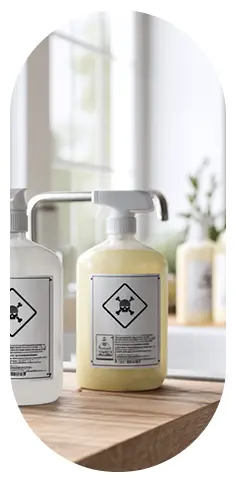
'Clean' doesn't always mean safe
Most of us grew up with the idea that a cleaning product must have a strong smell to be effective. That 'smell of cleanliness' often comes from synthetic perfumes, chlorine, and other aggressive ingredients added to create a sense of hygiene and freshness. However, what we rarely consider is that these smells don't disappear immediately after cleaning.
In enclosed spaces, such as apartments and houses, these substances remain in the air long after using the product. Due to limited ventilation, their concentration can be several times higher than outdoors, meaning we breathe them in for hours, even days after cleaning.
The problem is also that these chemicals don't just stay in the air. They settle on surfaces we touch every day - kitchen countertops, dining tables, children's toys, door handles, even bedding. This way, exposure doesn't end the moment we finish cleaning, but becomes part of our daily life.
That's why it's important to ask: do we really need an intense smell to have a clean and safe home, or is there a simpler and healthier way?
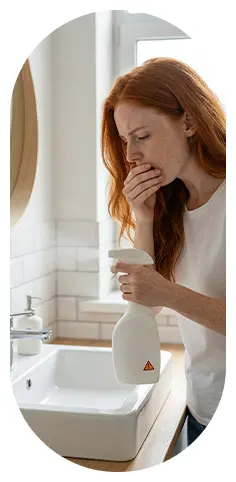
Which chemicals are most commonly present?
Many conventional cleaning products contain ingredients that are effective at removing dirt, but can also have unwanted effects on health and indoor air quality. The most common substances include:
- Synthetic fragrances added to give the product a 'fresh' and intense smell. Although pleasant at first, they can cause headaches, respiratory irritation, and discomfort in sensitive individuals.
- VOC compounds (volatile organic compounds) that easily evaporate into the air and contribute to indoor pollution. Their presence can affect the quality of air we breathe daily in our home.
- Ammonia and chlorine, strong chemicals often used for their effectiveness, but which can irritate the skin, eyes, and mucous membranes, especially with frequent or improper use.
- Preservatives that extend the product's shelf life but don't necessarily contribute to its safety, especially with prolonged and repeated exposure.
Particularly sensitive are young children, pregnant women, pets, and people with allergies or respiratory problems, in whom even small amounts of these substances can cause unpleasant reactions.
Long-term impact on family health
Although negative effects are not immediately visible, prolonged daily exposure to chemicals found in conventional cleaning products can over time lead to chronic irritations, worsening allergies, and additional strain on the body. This exposure often goes unnoticed because it happens gradually, through routines we repeat day after day.
Particularly vulnerable are family members who spend the most time indoors, such as young children, elderly people, and pets. Their bodies are more susceptible to external influences, so even smaller amounts of harmful substances can have a greater effect.
Home should be a place of rest, recovery, and safety - a space where we feel protected and calm. When it becomes an additional source of pollution, even unintentionally, it loses its basic role. That's why it's important to reconsider habits and products we use daily, and consider healthier alternatives that support the well-being of the whole family.
Natural alternative without compromise
Natural cleaning products use carefully balanced formulas that clean effectively, but without aggressive fumes. La Casa Nysa tablets dissolve in water and allow you to get a functional cleaning product without unnecessary additives.
Cleanliness can be simple, effective, and safe at the same time.