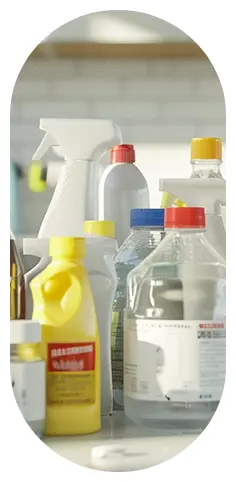
A problem that starts at home
Most cleaning products come in plastic bottles designed for short-term use. After the product is used up, the packaging quickly ends up as waste, often without thinking about its further journey. Although some plastic is recycled, the reality is that a large percentage of these bottles never return to the production cycle.
An average household can consume dozens of plastic bottles per year just for kitchen, bathroom, and universal surface cleaners. When that number is multiplied by thousands of households, the amount of waste becomes enormous and unsustainable in the long term.
The problem is further complicated by the fact that cleaning product packaging is most often used only once, instead of being part of a reuse system. When packaging is not refilled but constantly replaced with new ones, the amount of waste inevitably grows.
In this way, the pollution problem doesn't start in factories or landfills, but in everyday habits that are repeated over and over in our homes. It's precisely these small, routine decisions that have the greatest cumulative impact on the amount of waste we leave behind.
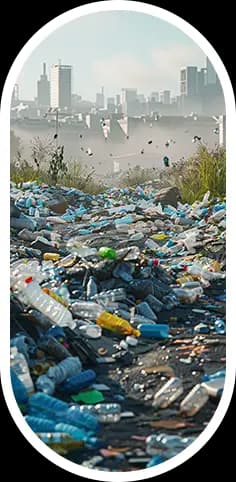
Where does plastic really end up?
Plastic that is not properly collected and recycled over time breaks down into tiny particles known as microplastics. These particles are created by the influence of sun, water, and mechanical wear, but they don't disappear - they just get smaller. Microplastics thus end up in rivers, lakes, and oceans, but also in soil, from where they enter the natural flows that surround us.
In this way, pollution doesn't remain 'someone else's problem'. Microplastics return to all of us through the water we drink, the food we eat, and the air we breathe. Although these particles are invisible to the naked eye, their impact is long-term, gradual, and widespread, because once they enter the ecosystem, they are very difficult to remove.
When we look at the bigger picture, it becomes clear that every plastic bottle has its life cycle that doesn't end by throwing it in the bin. Its 'journey' continues through nature, often far from where it was originally used, leaving a trace that lasts for decades.
That's why reducing the use of single-use plastic is one of the most important steps towards a more responsible relationship with the environment. Choosing solutions that encourage reuse of packaging and longer-lasting habits helps gradually reduce the amount of waste - and home, as the starting point, becomes part of positive change, not its source.
Less packaging = smaller footprint
A sustainable approach doesn't mean giving up cleanliness, but changing the system. Instead of buying a new bottle every time, reusing packaging drastically reduces the amount of waste and transport emissions.
The La Casa Nysa concept allows using one glass bottle and refilling with tablets - without unnecessary plastic and oversized packaging.
Sustainability starts with small choices
When such choices add up at the city, country, or world level, the difference becomes huge. A sustainable home doesn't have to be perfect, just consistent. Every small decision, repeated day after day, contributes to creating habits that have a long-term positive impact on the environment and quality of life.